
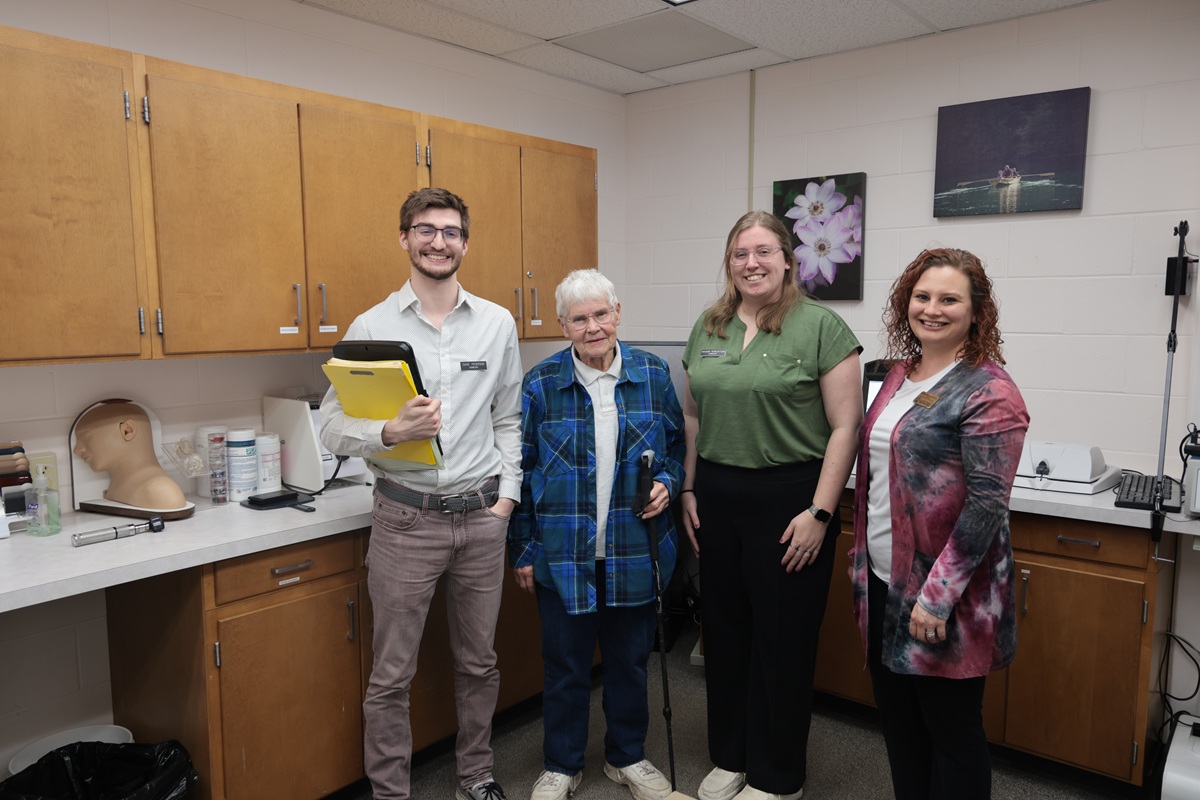
Known as a leader in teacher and healthcare education, the University of Wisconsin-Stevens Point has taken these programs to the next level, offering the most doctoral degrees out of all the comprehensive Universities of Wisconsin (outside of the Madison and Milwaukee Research 1 campuses).
With programs including a consortium Doctor of Audiology, independent Doctor of Physical Therapy, and two Doctor of Education degrees in educational sustainability and language and literacy, UWSP programs represent 29% of all doctoral degrees offered across the 11 comprehensive UW institutions.
Audiology paved the way for comprehensive doctoral education
The road to leading in doctoral education started nearly 20 years ago to accommodate changing standards in the field of audiology and paved the way for institutions outside of the Universities of Wisconsin flagship campuses to do the same.
In 2003, the American Speech, Language and Hearing Association (ASHA) made changes in its standards, resulting in the required entry-level degree for an audiologist to go from a master’s to a clinical doctorate degree. To accommodate this change, the two campuses offering master’s degrees in audiology came together to establish a collaborative program that would allow students to graduate with the degree by the time this would take effect.
In 2007, the Wisconsin Audiology program, a consortium program between UW-Stevens Point and UW-Madison, graduated its first cohort of doctoral students. Previously, comprehensive institutions were not permitted to grant doctoral degrees. However, upon receiving approval from the Board of Regents, UW-Stevens Point would become part of a first of its kind collaborative program between a comprehensive and R1 institution in the state.
Since then, the audiology program has enrolled roughly five students per cohort at the Stevens Point campus for a four-year doctoral program centered on hands-on clinical experience and community outreach. Looking ahead, the program will transition to being independent in summer 2028, allowing a cohort of up to 15 students to receive instruction from exclusively UWSP faculty in an accelerated three-year program.
“Our faculty are great about dedicating themselves to our students, and we’ll have the opportunity to be hands on with more of them once the program is standalone,” said Sarah Andersen, clinical audiology supervisor. “This will also allow more options for second-year clinical placements, where students can explore options outside of Stevens Point.”
Students praise the program for offering faculty and peer mentorship, and hands-on training through the campus Speech, Language and Hearing Clinic. Mhairi Robertson, a second-year Au.D. student from Durand, Ill., completed her undergraduate degree at UWSP and found these opportunities meaningful when deciding where to pursue her doctoral degree.
“Coming in from doing my undergrad at UWSP, I already knew most of my instructors and felt understood by them as a student and a person,” said Robertson. “First-year students are also partnered with second-year mentors right away, and we are seeing patients with them in our second week of classes. The staff in the audiology program are knowledgeable, and it was great to have older students to learn from in my first year and now be able to pass these tips on as a mentor.”
With affordability being a primary concern for prospective students at all levels, UWSP offers a competitive price point for Wisconsin residents. Claire Kintop is a second-year Au.D. student from Green Bay, Wis., who earned her undergraduate degree from Northern Michigan University. She said that the affordability of an in-state program and small cohort sizes felt like the right fit for her doctoral experience.
“UWSP was the best overall fit for me when considering audiology programs because of the in-state tuition cost and affordability of housing and travel,” said Kintop. “Since I had a very positive experience with my smaller undergraduate cohort and town size, I also wanted this in graduate school, which UWSP provides. The smaller cohort allows me to have more hands-on learning experiences and the opportunity to build stronger relationships with my classmates and professors.”
Beyond the impact the program leaves on its students and graduates, housing an audiology program at UWSP provides Central Wisconsin with affordable and easily accessible hearing care. Through community outreach with aging and disability agencies and a hearing clinic that is available to the public, students are gaining real-world experience, while supporting access to healthcare in our community.
“Our students are very active in the community and provide services and information about the importance of hearing testing, even doing free screenings at the Aging and Disability Resource Center. We really act as a bridge to the community and provide services to our aging population that they may not have considered before,” Andersen said.
In addition to the Doctor of Audiology, the School of Health Sciences and Wellness is home to a Doctor of Physical Therapy program that trains professionals to serve rural communities. The program welcomed its first cohort in 2021, and each summer it welcomes another group of more than 30 students who complete the degree in two and a half years.
A new doctoral focus

Bridging the literacy gap in education has gained national attention. With new legislation at the state and national level surrounding literacy instruction, educators, administrators and policymakers seek to grow their understanding of language and literacy development.
UW-Stevens Point’s Doctor of Education in Language and Literacy welcomed its first cohort of 26 students this summer. This program not only seeks to open career opportunities for graduate students but also allows students to enhance their skills to better serve them in their current roles.
“Our program is aimed at closing the research to practice gap that exists in our educational system,” said Amber Garbe, program director. “People who are entering the program have already refined their craft to a high level, and now it’s a chance to dig in even deeper into the compendium of research. This program is built to increase success in literacy roles, many of which our students already have.”
UWSP is well positioned to house this program, with years of history as a school for educators. Ashley Vedvig, program manager, notes that UWSP’s cross-disciplinary approach and established resources for educators put it at the forefront of doctoral education.
“The School of Education has such a long history of being involved in the community and at this university,” said Vedvig. “We have outstanding faculty, and our master’s and doctoral students can even take elective courses at each other’s level. Within the school, we also have the Harju Center for Opportunities in Education, which supports rural educators beyond their time as students.”
Bob Sparks, a school administrator from Tennessee, spent several years in the classroom as a high school English teacher and is now enrolled in the first cohort in the Language and Literacy Ed.D. program. Although he has training in educational leadership, Sparks was looking for ways to bridge the gap between research and practice in literacy. When searching for a doctoral education that fit his interests, UWSP stood out by offering the flexibility he needed while still feeling engaged in a community of fellow educators.
“I knew I wanted more training in the literacy space, in a cohort with other people whom I could have discussions with, so the flexibility of a remote program with synchronous elements felt like a good fit,” said Sparks. “After coming to residency, I feel even more affirmed in my decision to choose UWSP. I felt very at home when I came to campus, and I’ve already built good relationships with my colleagues and faculty.”
Although he has only been enrolled for a short time, Sparks has been enjoying the supportive atmosphere his colleagues and instructors foster in the program. He looks forward to starting the research process, focusing on the middle and high school level literacy gap.
“There has been a national conversation around the science of reading and literacy typically focused on elementary grades, and I see a gap in the secondary space,” said Sparks. “One of the things that got me thinking about doctoral work is how I could better equip myself to be a leader in that space. I want to focus my research on what cognitive science has to say about secondary learners and adolescent literacy.”
The program is 54 credits and designed to be completed in three years with student-driven research outcomes. Instruction is primarily online, with a residency component that meets at the UWSP campus in the first year, and at conferences where students can share literacy focused research in the second and third years.
UWSP offers two doctoral programs in education, with the other focused on educational sustainability. The educational sustainability program was established in 2017 and takes a deeper look at sustainability, and how educators and leaders can understand and respond to systemic economic, ecological and social justice issues. This program helped pave the way for Language and Literacy.
As a leader in doctoral and graduate studies, UW-Stevens Point is a hub for students to find higher earning potential and advance their careers in education and health science across Wisconsin and beyond.
“I graduated from the audiology consortium in 2018,” said Andersen. “Earning a doctoral degree opens the door for so many opportunities to advance your career. Having these programs at UWSP allows us to put the institution on the map as a destination for advanced degrees and show other schools that they can do it, too.