
Cultivating the Mirror Image: Personal Transformation and Sustainable Living Through Cultural Immersion in Maui
My five-day Doctoral Educational Sustainability Residency in Maui became far more than an academic experience; it was a tremendous journey of personal transformation that fundamentally shifted my understanding of how culture, environment, and community interconnect to create sustainable living systems.
As I arrived at the Seaside Hotel after traveling from the airport, I carried with me the anticipation of learning about educational sustainability. What I did not anticipate was how deeply the people, landscapes, and stories of Maui would awaken my spirit and reshape my approach to teaching, learning, and living.
Experience 1 – Sacred Waters and Ancestral Connections
The second day of the residency took our group to the North Shore of Maui, to Ho’okipa Beach, a journey that would become the spiritual cornerstone of the week. Before joining my cohort on the beach, I performed a ritual I have carried throughout my life: paying homage to my ancestors at the ocean. Following the traditions of my homeland, I walked into the water, and as the waves welcomed me, I felt the cool touch of my ancestors beneath my feet. I breathed in the salty air and, in my mother tongue, whispered “Lậche prise” let it go, let it go releasing the hardships I have endured in America. My voice carried across the beach with such power that my cohort members heard me from a distance.
In that vulnerable moment, something remarkable happened. My classmates joined me in the natural pool created by the ocean, and I taught them a song about the sea “C’est de l’eau” that I use in my own classroom to teach environmental awareness. This spontaneous moment of cultural and ecological teaching forged an unexpected bond between us. I began to truly know each member of my group on a deeper level, and they came to understand not just my words, but my spirit. We watched sea turtles glide gracefully through the water, creatures that have sustained themselves through the ocean’s cycles for millennia. In observing them, I recognized an important lesson about adaptation, resilience, and living in harmony with natural systems principles at the heart of sustainable living.
Experience 2 – Indigenous Knowledge and Sustainable Practice Fostering a Sense of Community
Our final full day at Paeloko Learning Center became the emotional and spiritual apex of the residency. This center is a living classroom of indigenous Hawaiian culture and sustainable practice. As we entered the sacred circle, we were invited to introduce ourselves so the Hawaiian community could welcome us traditionally. The chanting and prayers of welcome moved me deeply, and I felt spiritually connected to the roots of this land in a way I had never experienced before. Tears flowed down my face as I stood at the back of the circle, witnessing a moment of cultural awareness and belongings that transcended language and background.
The community taught us the Hawaiian language and the meaning of their sacred songs. We learned how kapa is made from carefully preserved Po’a’aha leaves, (Paper Mulberry plants) a practice that demonstrates intergenerational knowledge transfer and respect for natural materials. Then we engaged in firsthand service learning at the taro (Elephant Ear) pond, getting our hands dirty in clay mud as we weeded the sacred plants. In that moment, I learned something essential: the leaves and roots of Taro can be consumed, embodying the principle of reciprocal relationships with the land. The green leaves of Elephant ears harvested, everything we ate that evening, came directly from the garden cultivated by the community. This experience illustrated how important the fresh food systems are rooted in cultural knowledge, community labor, and respect for the land.
As we shared the harvested taro and other delicious meals with our “Hawaiian” hosts, I felt our souls and spirits connecting. The food we ate was not merely nourishment, it was a tangible expression, practice, cultural continuity, and human connection. After the meal, we visited Baldwin Beach for a moment of reflection and rest, grounding ourselves in the beauty and power of Maui’s natural landscape.
Integration and Future Commitment
On our final morning, the alumni of Ed.D. before us shared their wisdom about their doctoral journeys. Their guidance became invaluable as I contemplated my own dissertation ahead. In their reflections, I recognized that this residency is not an ending but a beginning a foundation for how I will approach my scholarship and my teaching.
This residency has irrevocably transformed my understanding of environmental stewardship. I now recognize that sustainable living emerges through cultural awareness, respect for indigenous knowledge systems, recognition of our shared humanity, and commitment to protecting both ecosystems and vulnerable communities. The beauty of Maui’s beaches, the power of cultural immersion, the laughter and support of my cohort, the wisdom of the Hawaiian community, and the spiritual awakening I experienced will guide my teaching and my life moving forward.
I arrived in Maui as a doctoral student seeking to understand educational sustainability. I leave as someone forever changed, carrying the voices, faces, and spirits of the people I met. The interconnectedness I witnessed between culture and land, community, and environment, past and future, personal transformation and collective responsibility is what I will now teach. As an educator, I am committed to creating learning spaces where students recognize that we are all one piece, that everything grows together, and that true sustainability requires honoring the mirror image of our own culture in others while protecting the earth that sustains us all.
As a teacher and world traveler you have done a tremendous job organizing those activities that are important learning experiences for all of us. It was fantastic and well done. Thank you Dr. Vevig for all you do.
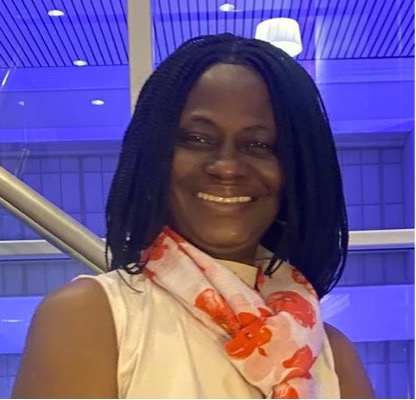
Justine Coho-Horvath is student in cohort 9 of the Ed.D. in Educational Sustainability program at the University of Wisconsin-Stevens Point.